
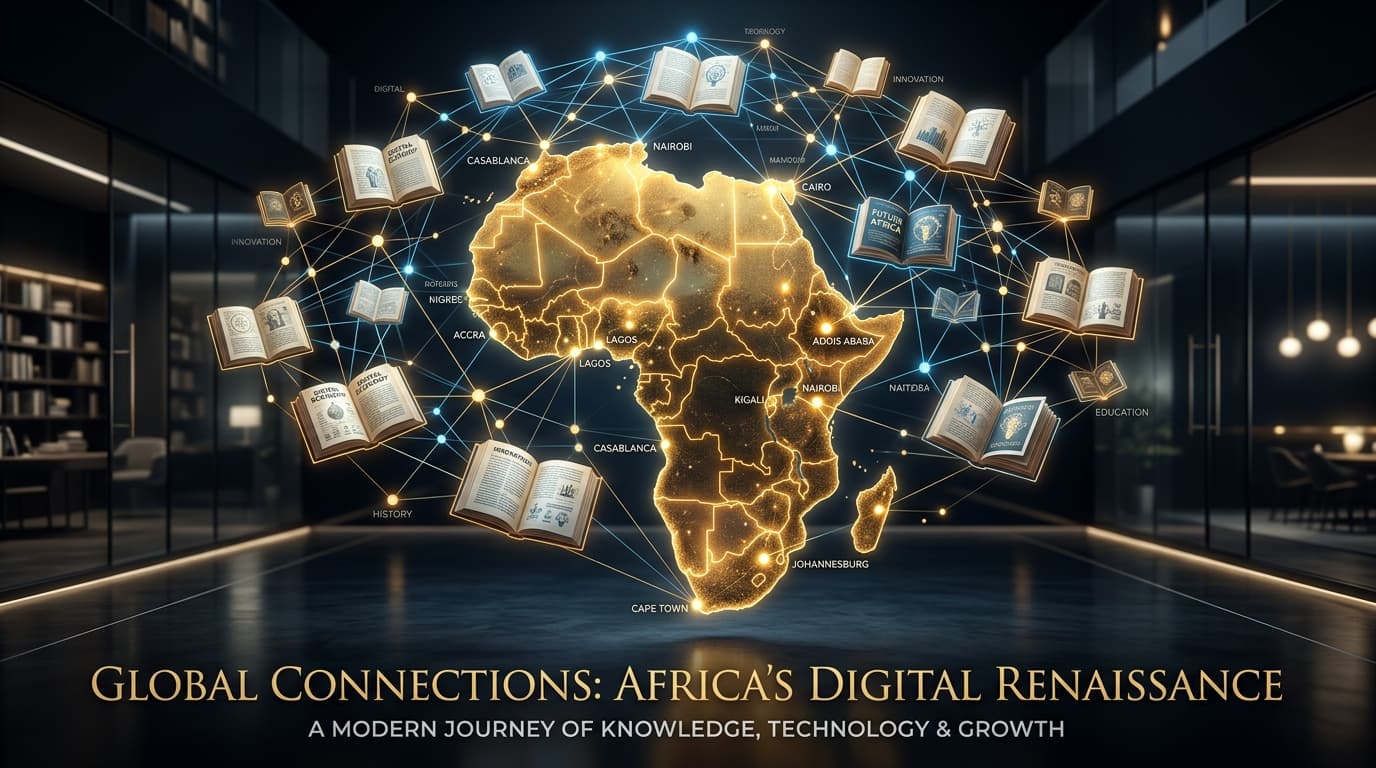
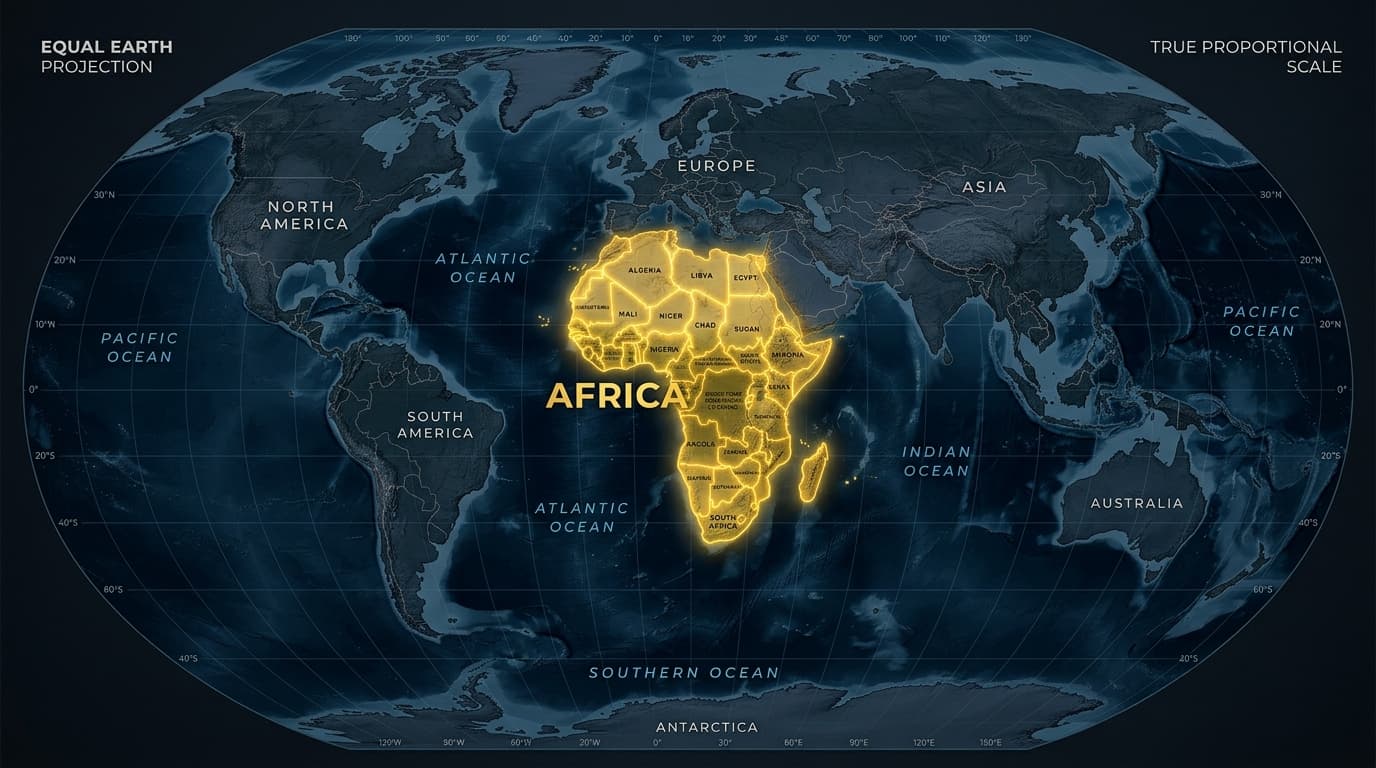
If you look at the map of global wealth, you will encounter one of humanity's greatest enigmas: how does the most resource-rich continent on the planet home nearly half of the world's population living in extreme poverty?
Africa holds roughly 30% of all global mineral reserves. African soil contains 40% of the world's gold, 90% of its chromium, 90% of its platinum, and vast reserves of cobalt, petroleum, and diamonds. Yet, World Bank reports indicate that over 40% of Sub-Saharan Africa's inhabitants live on less than $2 a day.
So, why isn't Africa developing at the same pace as Europe, Asia, or the Americas? Is it a leadership problem, a result of endless wars, or is there an invisible gear holding the continent back?
In this article, we dismantle simplistic myths and analyze the three real pillars that explain this equation, and why the ultimate answer might be in something you are holding in your hands right now.
1. the extractivist legacy: the berlin ruler and "Fishbone" railways
To understand Africa's present, we must go back to the year 1884. In an elegant conference room in Berlin, 14 European powers gathered to carve up the African continent as if slicing a birthday cake. Without a single African representative present, straight lines were drawn across the map using rulers.
This artificial division forced rival ethnic groups within the same borders and split communities that had lived in harmony for centuries. The Kingdom of Kongo, for instance, was chopped up between what we now know as Angola, the Democratic Republic of the Congo, and the Republic of the Congo.
However, the deepest impact of colonization was its extractivist economic architecture.
While rail networks in the Americas and Europe were constructed in interconnected webs, linking cities, industries, and agricultural hubs to strengthen domestic trade, railways in Africa were built in a "fishbone" pattern. They were straight lines running from inland mines directly to export ports. The goal was never to develop the continent, but rather to extract its wealth as fast as possible.
2. the debt trap and the cycle of predatory financing
When African nations won their independence starting in the 1960s, the celebration was short-lived. Newly independent countries inherited nations lacking industrial infrastructure, burdened by low literacy rates and governments dependent on raw material exports.
To build roads, hospitals, and schools, many governments turned to loans from international financial institutions such as the International Monetary Fund (IMF) and the World Bank.
However, these loans came attached with "Structural Adjustment Programs." To receive funds, countries were forced to slash public spending on healthcare and education while privatizing strategic resources. The result was an endless vicious cycle of debt:
| Step | Situation | Consequence |
|---|---|---|
| 1 | Export of cheap raw materials | Low domestic value creation |
| 2 | Drop in commodity prices | Reduction of country revenue |
| 3 | Need for loans | Dependence on IMF or World Bank |
| 4 | High interest payments | Cuts in education and public services |
| 5 | Dependence on external infrastructure | Reduced economic autonomy |
| 6 | Restarting the cycle | Continuation of cheap raw material export |
When a country allocates 30% to 40% of its annual budget merely to service interest on past debts, very little remains to invest in training its own scientists, engineers, and doctors.
On the other hand, exceptions like Botswana prove that history can unfold differently. By rigorously managing its diamond extraction with transparency and keeping public debt at just 18% of GDP, Botswana became one of the fastest-growing and most stable economies on the continent.
3. cultural trauma and the education barrier
Beyond external geopolitical forces, crucial internal factors shape Africa's growth velocity:
- Institutional Flaws and Corruption: Autocratic models left behind by colonial administrators were perpetuated by local elites, eroding public trust in state institutions.
- Post-Civil War Trauma: Nations like Angola endured over 27 years of civil war following independence (1975–2002), destroying core infrastructure and fostering a culture of caution and political passivity among generations who lived through the conflict.
- Literacy Challenges and Water Access: In numerous rural areas, over 50% of the population struggles with access to clean water and reliable electricity. Expecting high-complexity technological innovation is impossible when daily survival remains the primary task.
The information revolution and a new era
Answering why Africa isn't developing requires looking at the past without getting trapped in it: Africa is not a poor continent, it is a continent historically impoverished by processes of colonial extraction, capital flight, and interest on external debt, a distinction that completely changes where the solution ought to be sought. The combination of arbitrary borders, suffocating debt, and governance failures stalled the continent for decades.
Yet a silent transformation is underway, and technology is its most visible engine. Mobile telephony and access to information already let African youth bypass bureaucratic intermediaries that were once mandatory, fueling fintech startups, digital education, and direct trade in countries like Kenya, Nigeria, and Angola itself. Today, a simple smartphone in the hands of an African youth provides access to the exact same volume of knowledge and digital tools available to a student in any major world capital.
Real African development will not spring from international charity or foreign aid. It will arise from applied knowledge, educational sovereignty, and a new generation of citizens fully aware of their rights and value. A concrete example of that applied digital knowledge can be seen in the digital professions already emerging in Angola.


Discussion
Comments
Leave your thoughts on this article.
Loading comments...