

Have you ever opened your social media feed and felt that the world suddenly became more intolerant, noisy, and polarized? Some argue that algorithms have made us dumber. But the reality is simpler: in 2015, Italian writer and semiotician Umberto Eco put it plainly when he noted that social media had given the right to speak to legions of imbeciles who previously only spoke at the bar. That idea can be summed up directly: the internet didn't create idiots, it just gave them a microphone.
Before the digital age, someone speaking without knowledge or the resident cynic remained confined to the bar counter or the living room. Today, with a single tap, any opinion gains the exact same acoustic power as a scientific study or a lifetime dedicated to community work. When a voice gains scale without responsibility, criticizing becomes more appealing than building.
To understand how this mechanism works in practice and why outrage is so often directed at the wrong targets, it is worth examining a real episode that captured public debate.
The humanitarian aid dilemma: between altruism and the phone camera
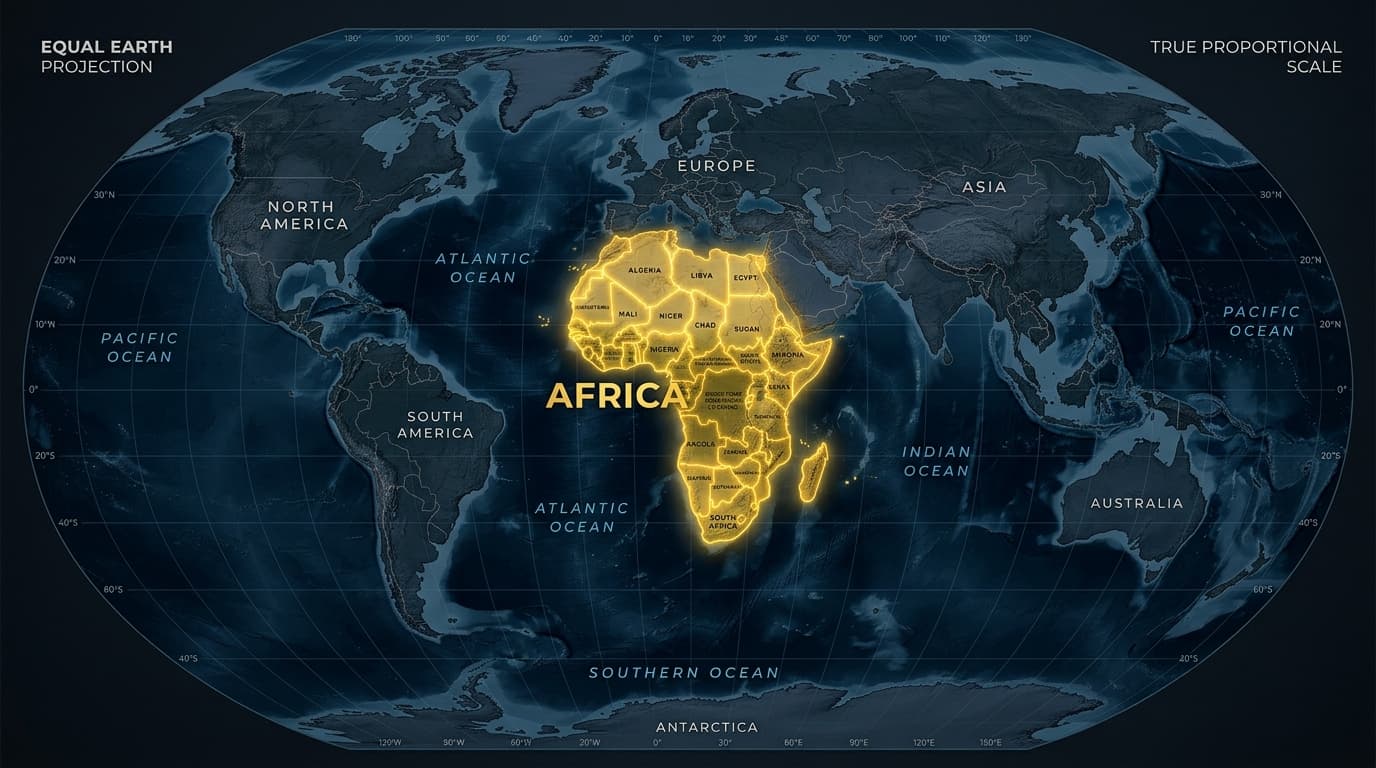
In 2017, the voluntary initiative Zuzu for Africa, founded by Brazilians Bruna and Gabriela, launched a mission in Angola to provide basic needs for vulnerable children: education, food, and health.
In mid-December, the Provincial Government of Bengo suspended the NGO's activities due to lack of legal registration. The case reignited debate when Angolan artist C4 Pedro (Nzamba N’Kunku Mpetelo Messami) published a manifesto on his social channels. His core argument was straightforward: philanthropy is welcome, but spectacularizing other people's misery for likes and personal vanity should be criticized.
This tension exposes a modern dilemma: even if image exploitation ought to be questioned, imperfect action on the ground still saves lives. Making mistakes while trying to help is more honorable than the comfortable inaction of watching from the couch.
Selective silence: why criticize the volunteer and ignore the state?
Here lies the main distortion. While public debate invested energy discussing whether content creators should film solidary actions in Bengo, a financial event of large proportions occurred in parallel.
In November 2024, Angola's political leadership announced plans to invest over 20 million dollars (around 18.5 million euros) to organize a friendly football match between the national team (Palancas Negras) and Argentina. All this during a severe socioeconomic crisis, with the population facing rising malaria cases, hospital shortages, and community tragedies that led activists to appeal directly to the Argentine Football Association (AFA) and Lionel Messi for the event's cancellation.
Where was the loud outrage of the digital public in the face of this contrast?
| Target of scrutiny | Resources & duty | Predominant digital reaction |
|---|---|---|
| The volunteer / NGO | Scarce resources, visible execution flaws | Relentless judgment, cancellation & suspension |
| Public authority | Billions in budget, constitutional duty | Selective silence, complacency & conformity |
Why is there so much courage to point fingers at those reaching out to help, and so little willingness to hold accountable those with a constitutional duty and a multi-million budget to change reality?
The anatomy of the digital microphone: how the echo effect works
To understand why this phenomenon repeats across society, from politics to science, we can look at how social networks altered information flow:
- The illusion of competence: having a tool to speak gives individuals the impression that their opinion carries the same weight as practical execution.
- The reward of outrage: engagement algorithms prioritize conflict. News about scandals or moral trials generate far more comments than reports of ongoing community solutions.
- The inversion of roles: holding governments accountable requires study, persistence, and organization. Calling out an influencer or an NGO requires only typing 280 characters.
To see this mechanism up close, the documentary The Social Dilemma, listed in this site's recommendations, explains how this reward-by-conflict design was built into the platforms themselves.
The internet didn't fabricate hypocrisy; it handed each of us a loudspeaker pointed at the world. The problem isn't that the microphone is turned on, but how we choose to use the volume.
Fewer speeches, more responsibility
This does not mean digital activism is useless. It can raise visibility and funding quickly for urgent causes. It becomes harmful when the pursuit of personal engagement supersedes the dignity of those being served, or when it replaces demands for public policy with quick judgments in comment sections.
Showcasing other people's vulnerability for attention is wrong. Seeking validation on top of human suffering deserves criticism. But ignoring misery and staying silent in front of those obligated to act is far worse.
Children who need schooling, sanitation, food, and medicine do not survive on virtual debates or video comments. They rely on real actions and a society mature enough to use its digital microphone with intelligence: praising those who act, correcting what is necessary, and holding accountable those with decision-making power.
If you have a voice on the internet, you have a responsibility. How do you intend to use your microphone today?


Discussion
Comments
Leave your thoughts on this article.
Loading comments...